Customer experience vision
Design vision for Checkr
Overview
Five months into joining Checkr, I led a vision project to reimagine the customer product experience. It reinvigorated an investment in design quality, served as foundation for multiple roadmap projects, and shifted how teams thought about surface-level UX.
Scope
👋 Owner (UI/UX, project management)
🧑🧑🧒🧒 Ad-hoc team of 3 designers
💻 Web app
🗓️ Feb – Mar 2023
Background
What we had
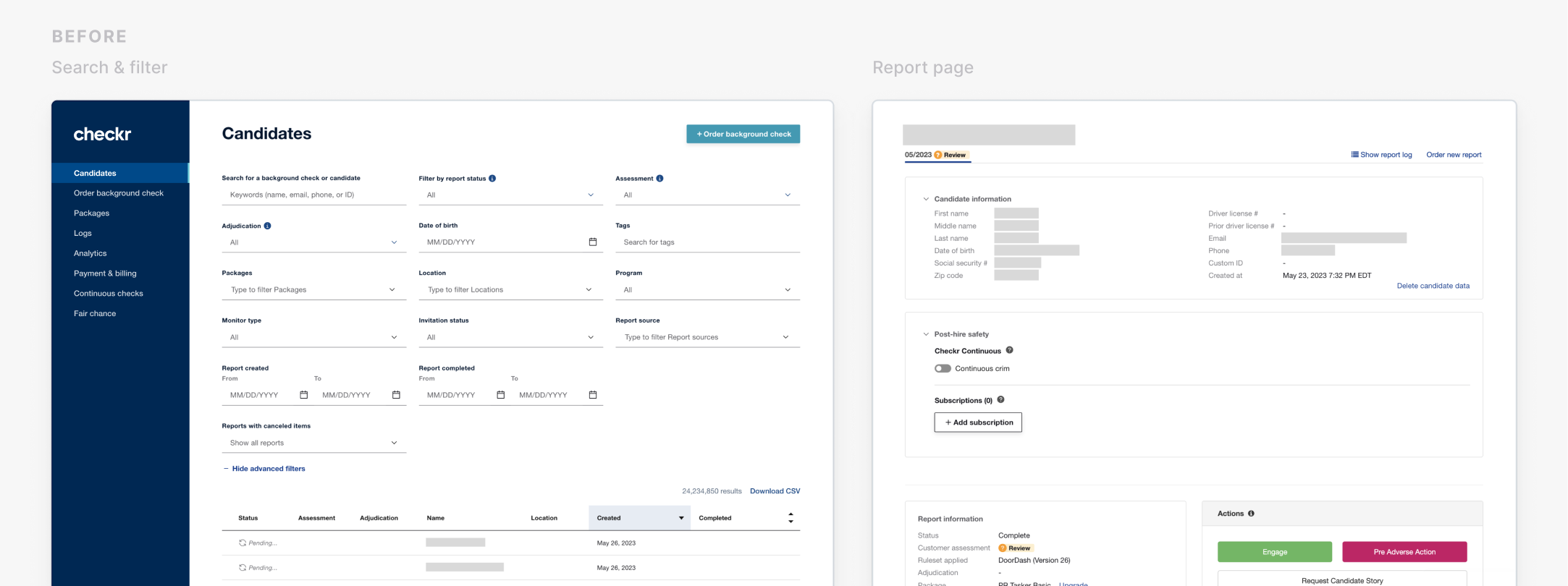
Checkr found early success being API-first and integrating into workflows for high-volume employers — their first customer was Uber.
Technical and product decisions were often shortsighted as they catered to these customers' specific needs.
what we needed
8 years in, Checkr needed to capture more self-service and SMB customers and it was widely-agreed that this meant we needed to redesign.*
* Research showed that we were not meeting the experiential expectations of SMBs.
The ask
I was asked to lead the definition of our product redesign.
The ideal output would be a North Star that enables our team to execute meaningful experience updates throughout the product.
Challenges
Prioritization and definition
"Redesign" is a vague mandate. Many problems were known, but the solutions were not.
Given ongoing product work, it was on me to strike the balance of making a meaningful impact without taking up too much time and focus.
I'm new here
It was important to me that we didn't just paint a pretty picture—I wanted to share a vision that was not only inspiring, but that solved real customer problems and was grounded in reality.
Best practices are a jumping-off point for upleveling product experiences, but beyond that I needed to gain a deeper understanding of our product(s), differentiators, and customer experiences.
Process
Discovery
Before diving into solutions, I spent time getting myself and a few other designers familiar with our potential scope.
Rapid retros
I organized FigJam sessions with SMEs across the business, including tenured product owners and implementations specialists.
- 3, 30-minute mini-retros
- 16 unique perspectives
- 119 stickies
Reviewing and categorizing these notes was was a crash course in our customers' end-to-end experiences.
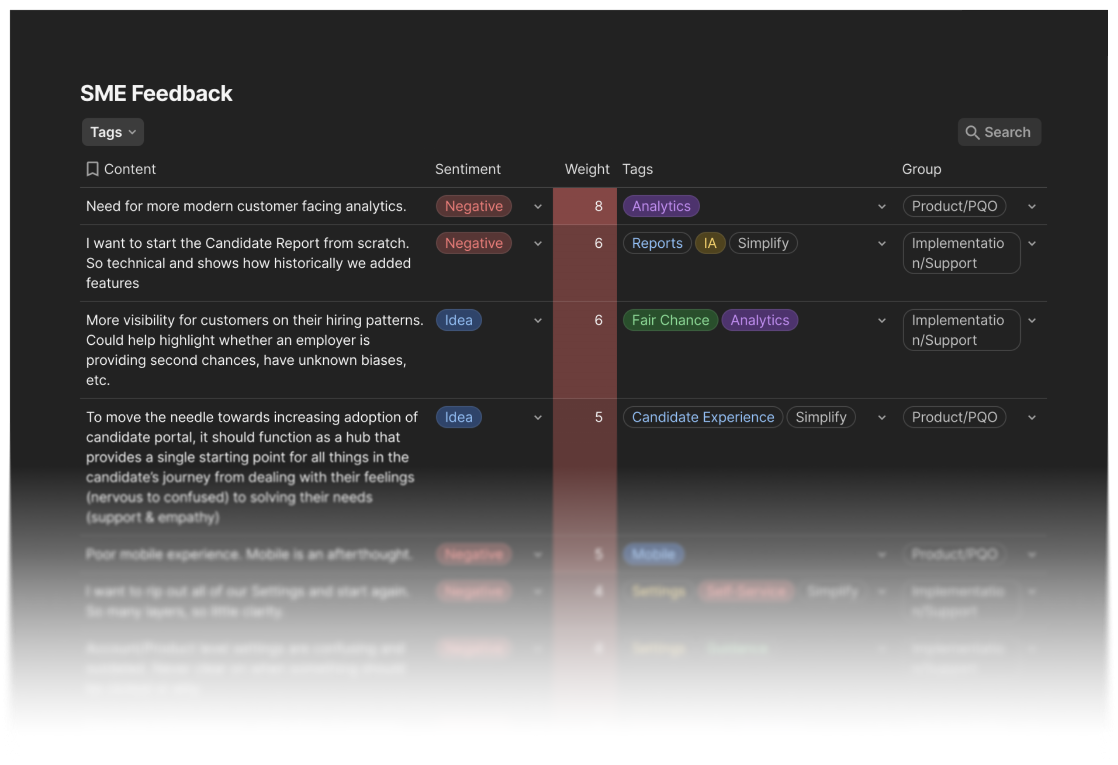
I documented and organized all stickies from these retros.
Comp analysis
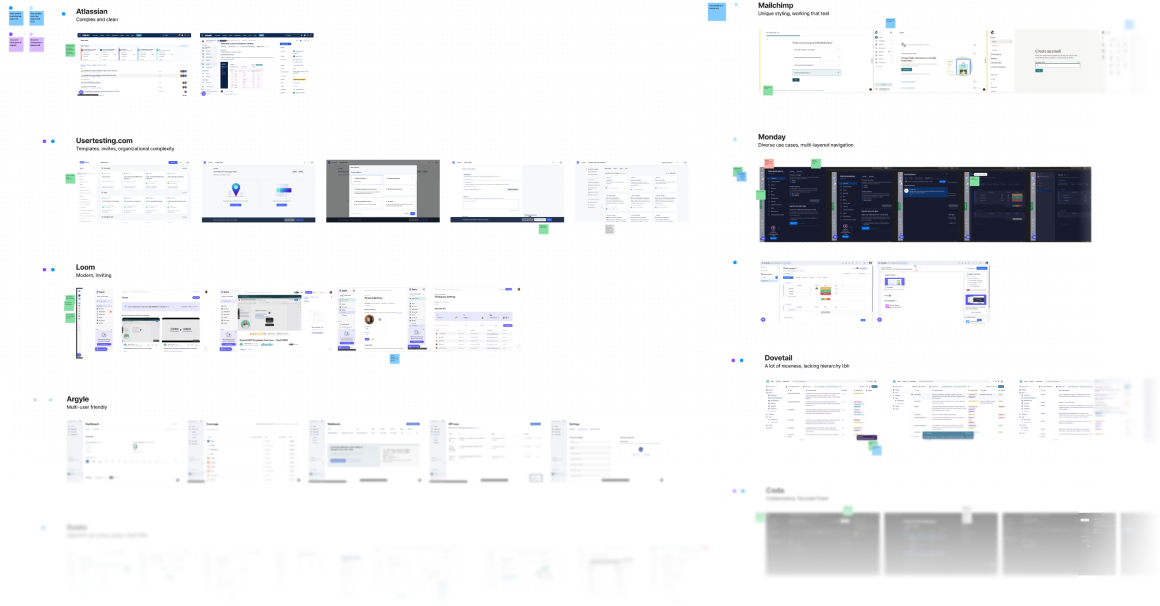
I spent time reviewing industry-leading SaaS tools and similar/adjacent products, and encouraged others on the design team to do the same.
We discussed navigations, interaction patterns, component treatments, and so on—and what made sense in the context of our specific use cases.
Design jams
I set up a handful of touchpoints with my ad-hoc teammates to review explorations, share ideas, and track progress. Ultimately, I brought it all together.
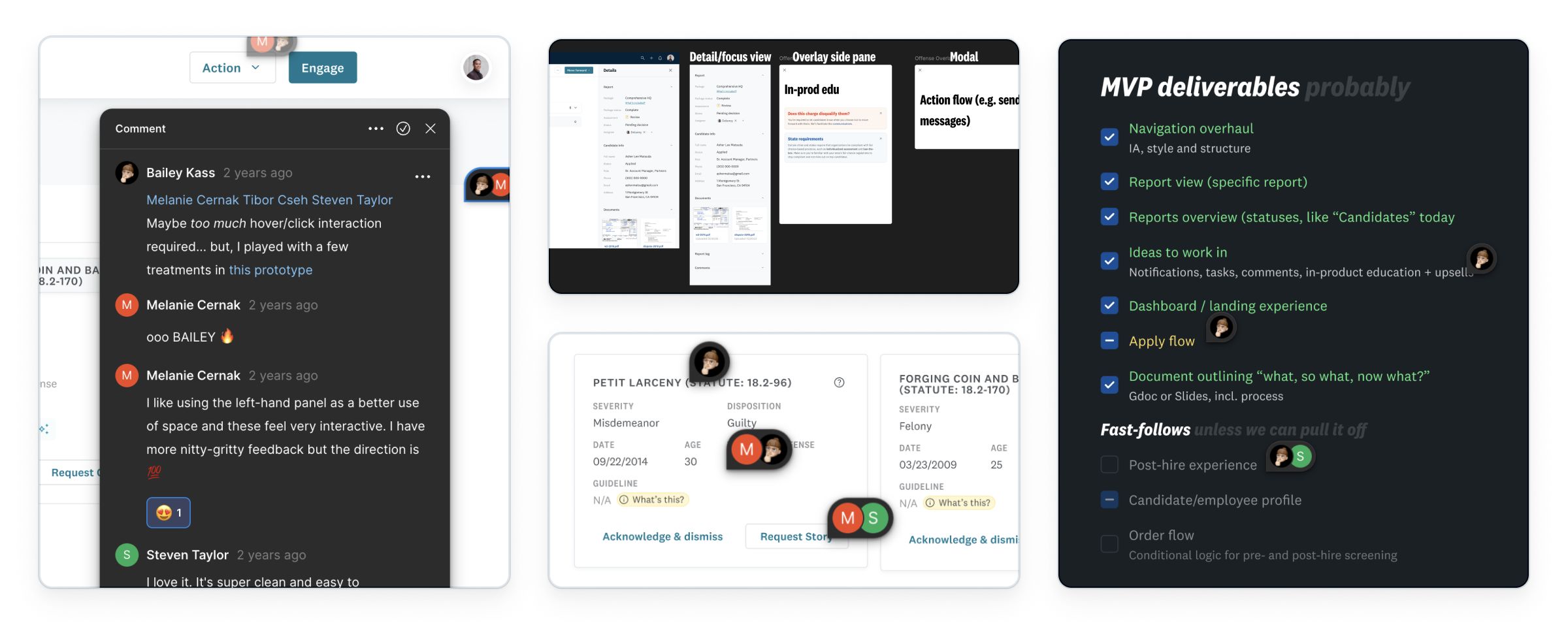
One of my focuses was navigation and information architecture. This included:
- Parent sections and sub-sections
- Global navigation actions
- User account access
- Collapsible side navigation
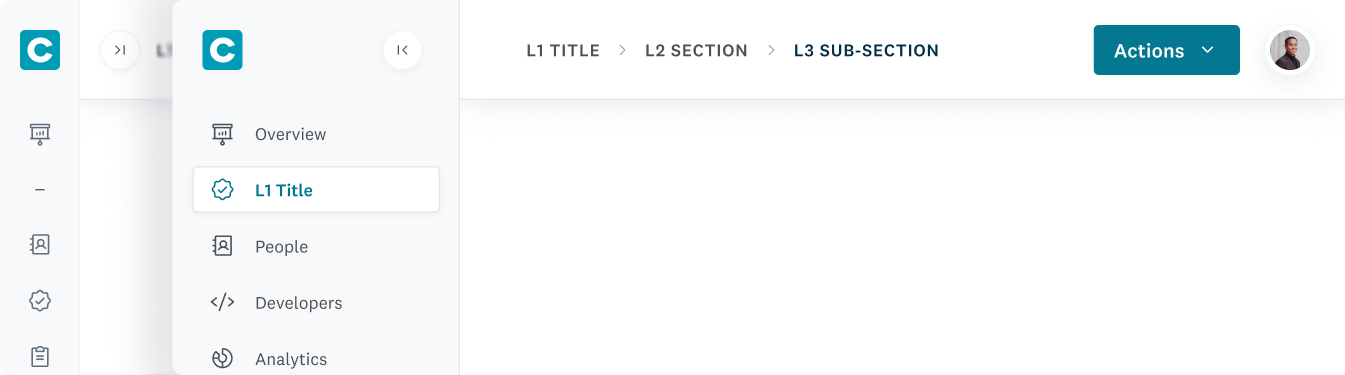
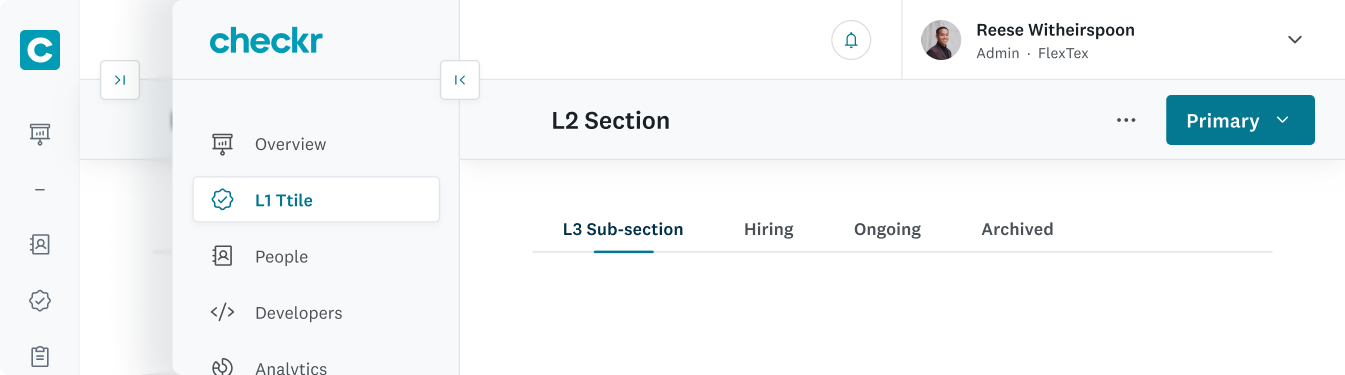
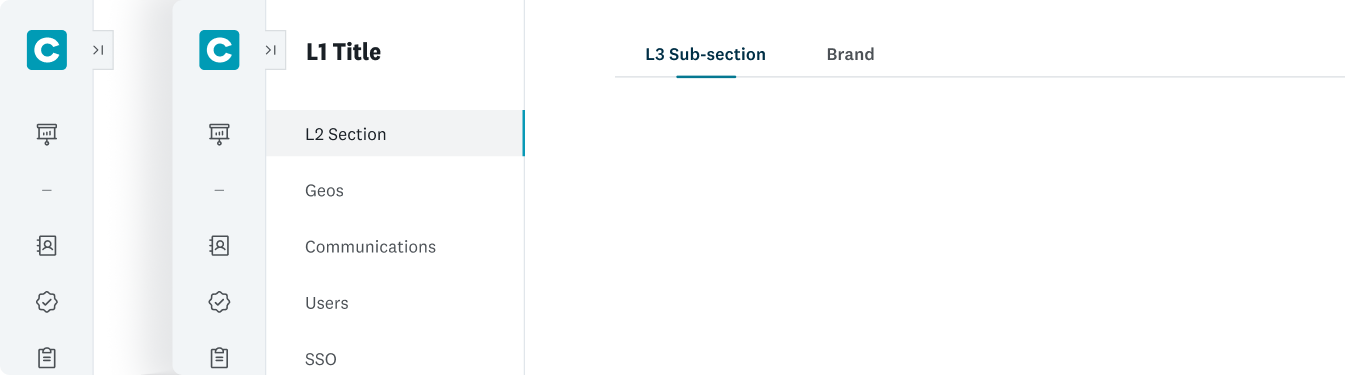
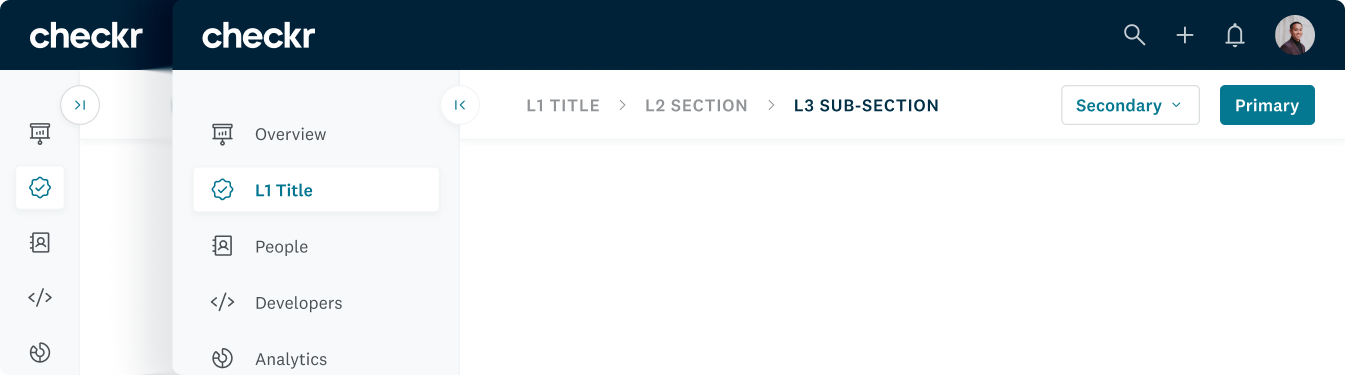
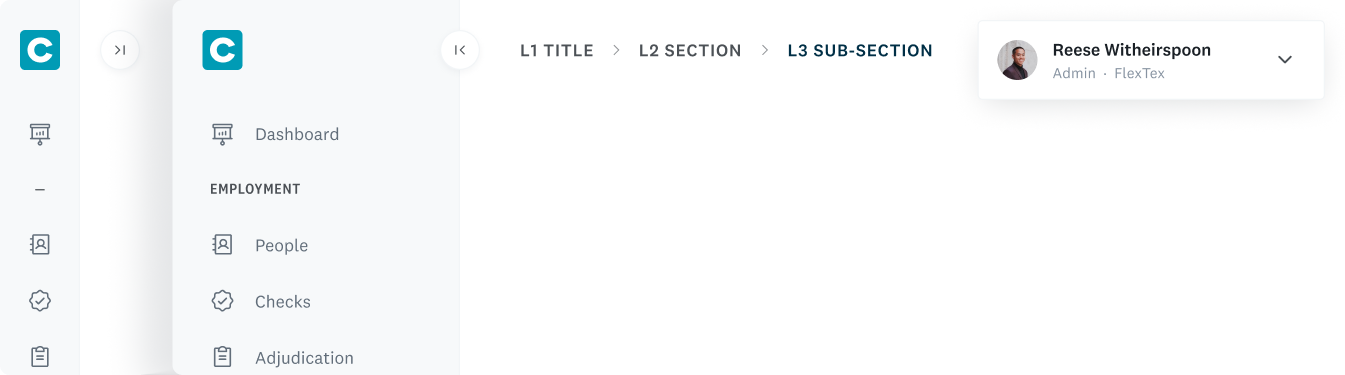
Some of my navigation/IA explorations
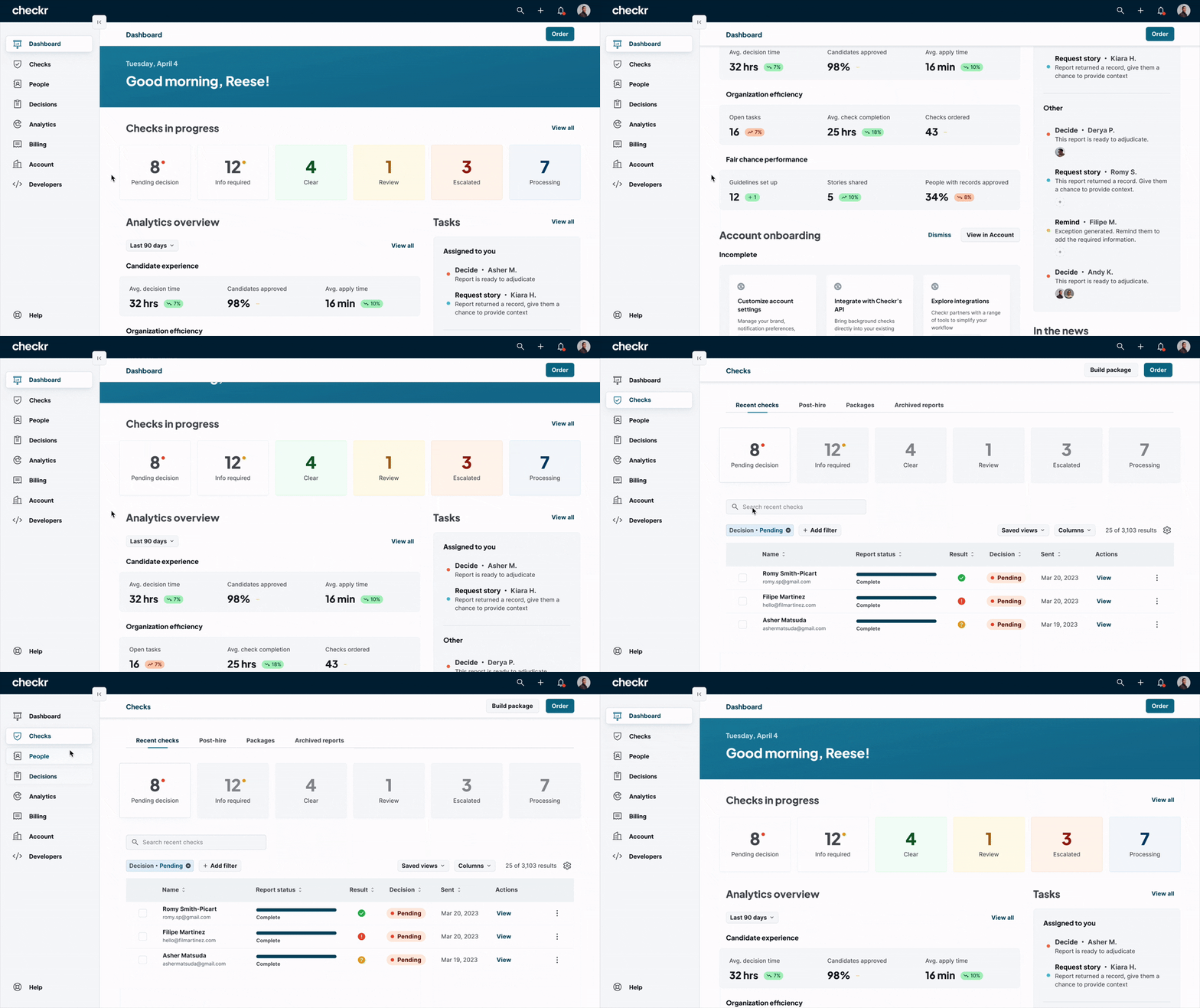
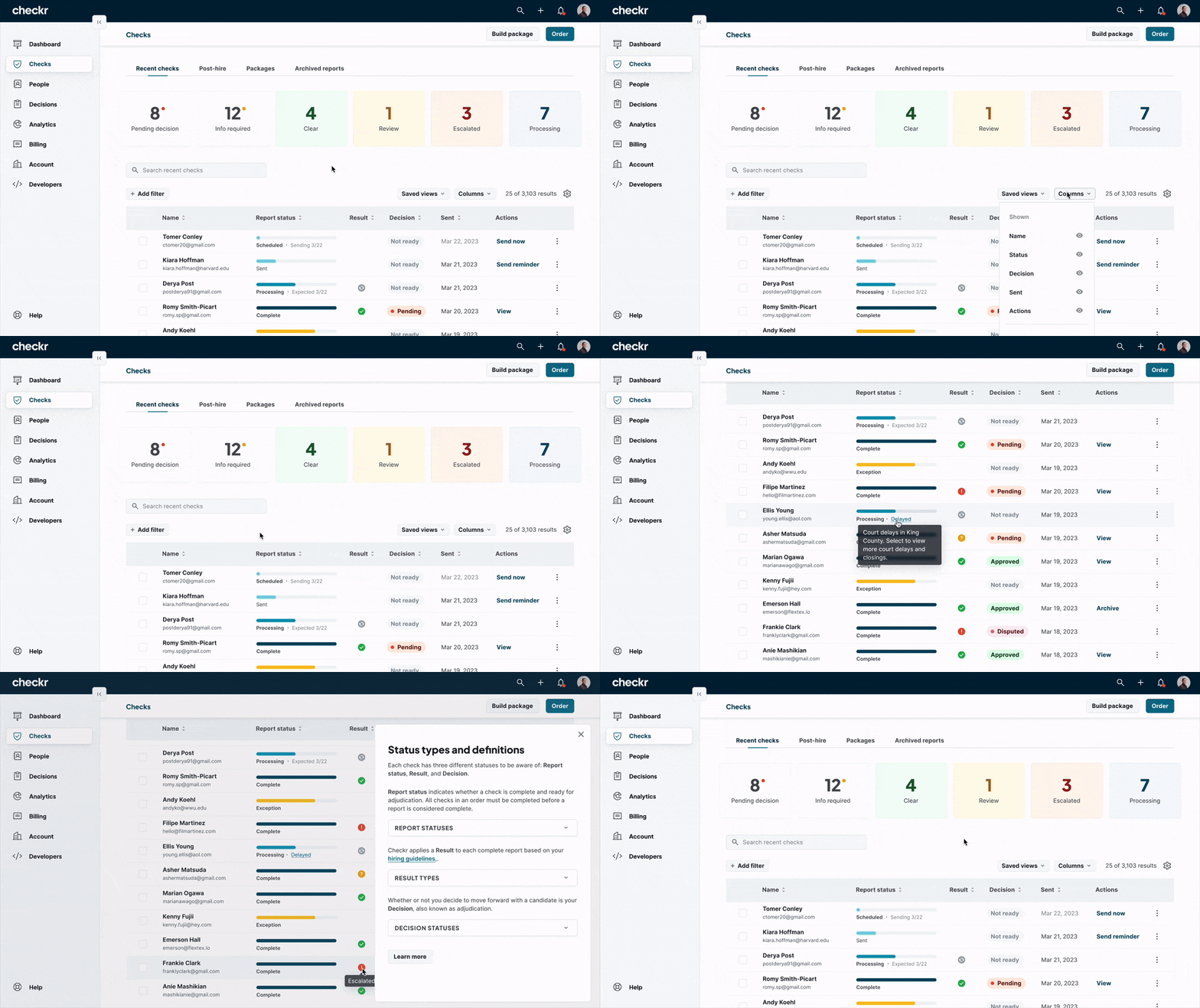
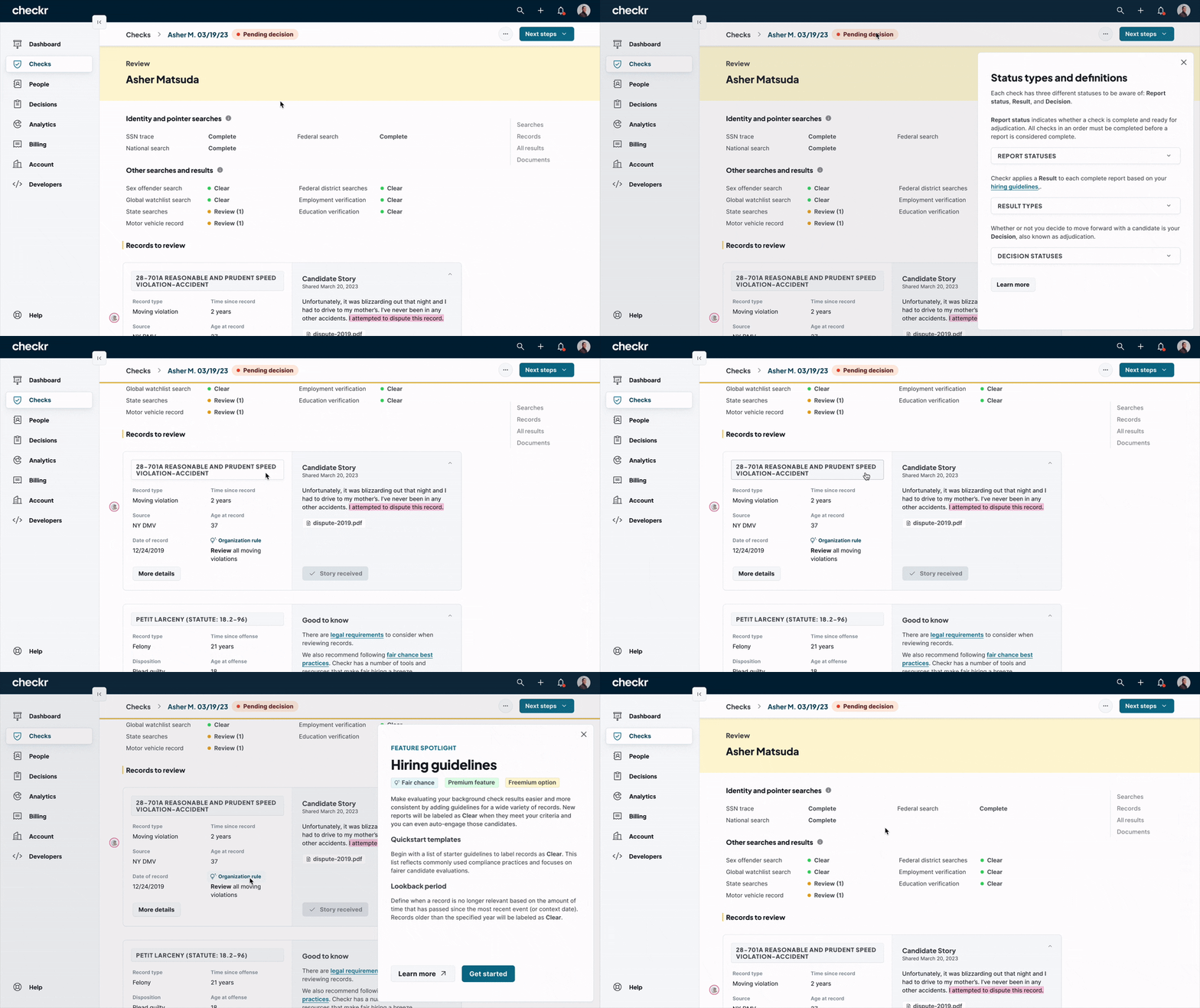
Final prototypes
Scroll ahead to explore yourself ↓
Delivery
Presentation
Immediately following this work, I presented the what and why at a product org onsite. It helped to engage more individuals and field questions before sharing the deck out more broadly.
Fast-forward to now; a handful of the ideas presented are live in our product.
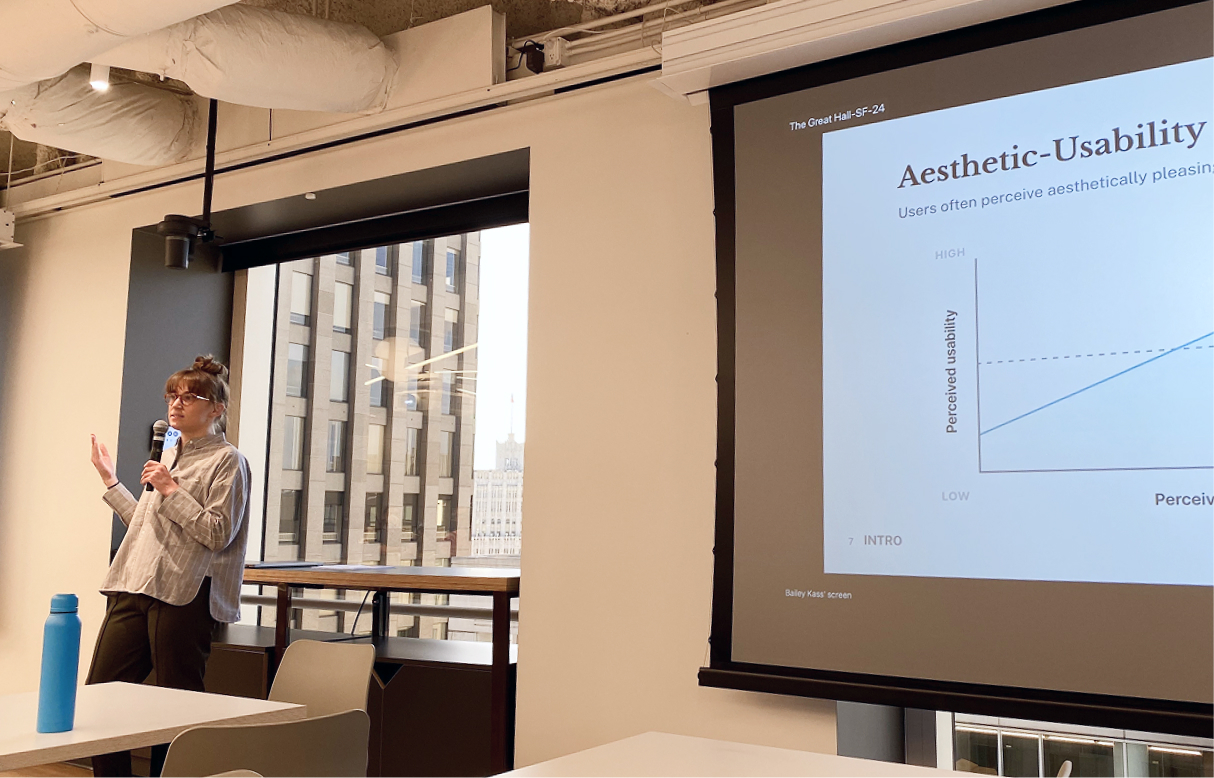
Speaking on the importance of design before showcasing the North Star at an onsite
key Prototypes
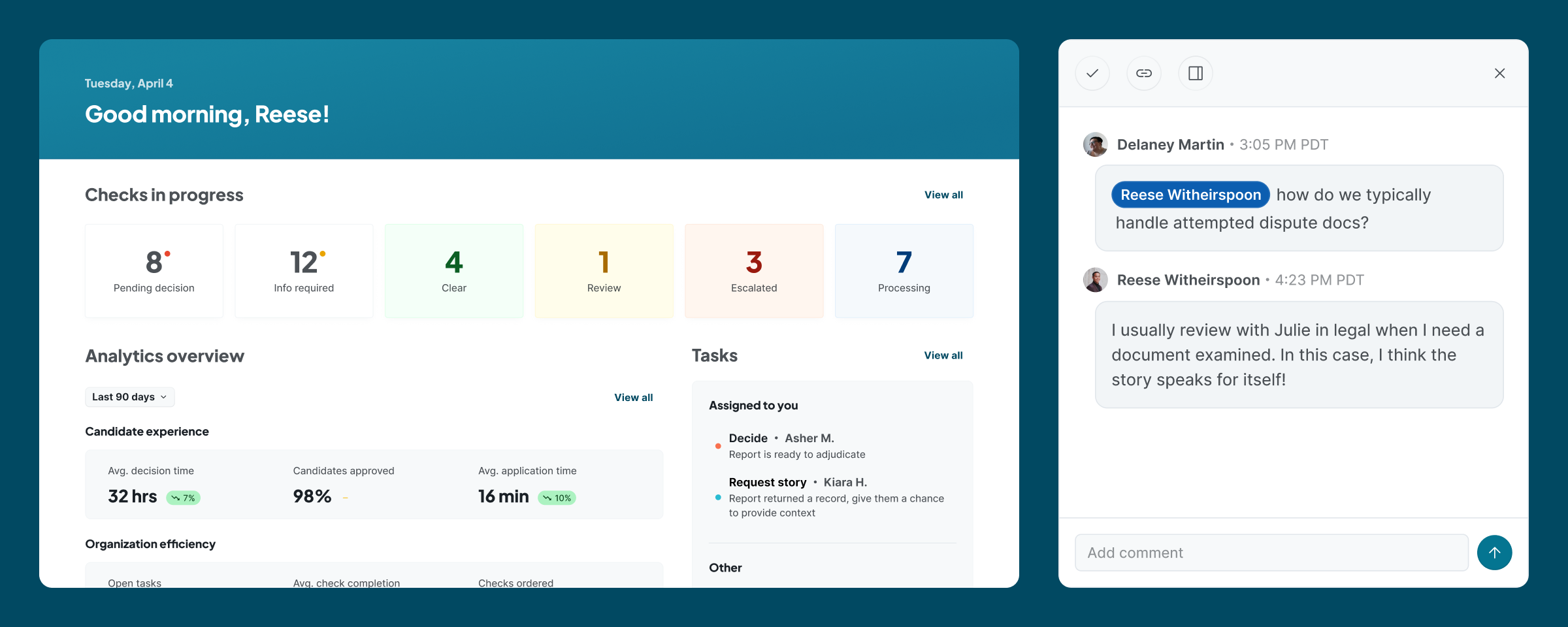
Home page
Net new: a jumping-off point for any user; a non-disruptive surface area to demonstrate feature value.
→ V1 launched Q2/24
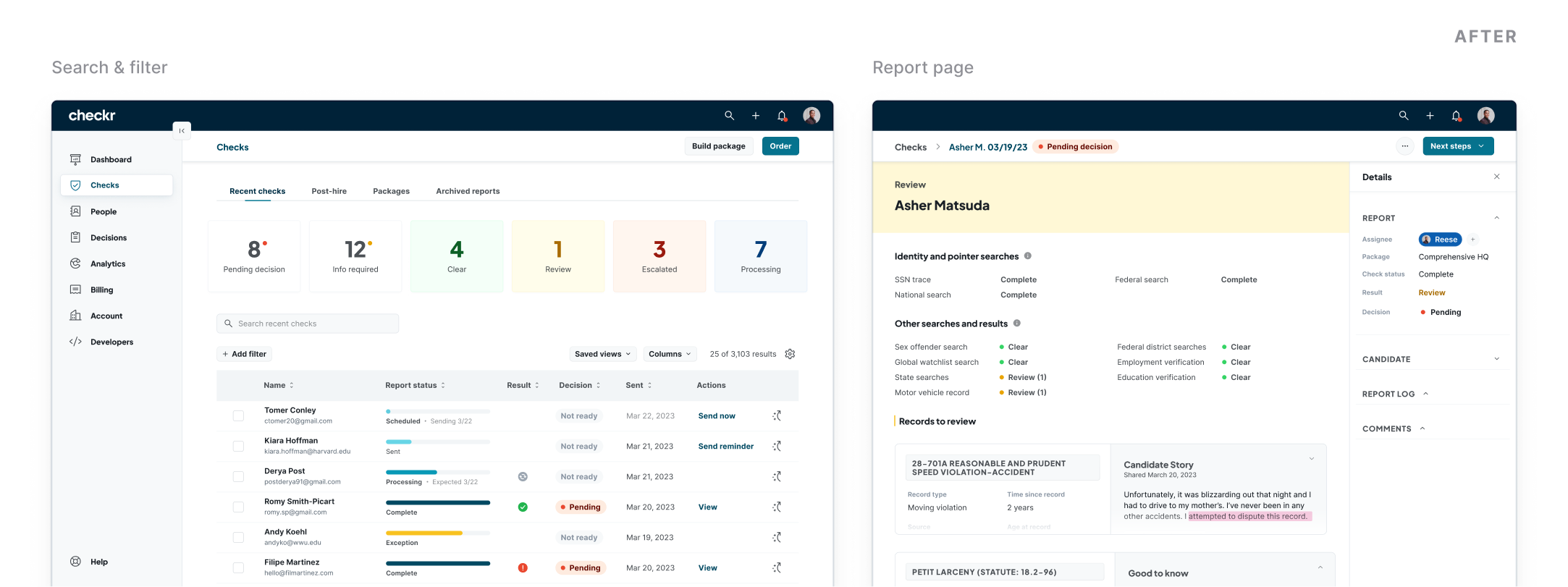
Checks
An overhauled search and filtering experience designed to scale and streamline workflows.
→ Beta launched Q2/25
Report
A fresh look at how we present critical information and drive cross-product engagement.
→ Rolled out Q3/24+
Outcomes
Reception
This work was received with excitement and action beyond my immediate team.
Design system
Reinvigorated collaboration between our design system tiger team of product designers (myself and two others) and engineers, as well as brand studio.
Hackathons
Inpsired two winning projects:
- Customer Experience Vision, 2023 — frontend development based on these designs
- AI Charge Explainer, 2024 — now an actual feature


A few cross-org comments on slides intended to spark cross-org comments :)
Project headstarts —
Three redesigns, all now live in the product, were drastically accelerated by this vision work.
- Report page: Out the gate, we had a totally new concept to start sharing and testing.
- Checks (aka Reports list page): The vision tested well and went largely unchanged, aside from design system updates.
- Navigation: The left nav received a visual overhaul to match the vision.
Design's role —
Showcasing a holistic, strategic vision helped reposition designers as proactive thought partners and helped raise our bar for user experiences.
- A shared vision helped designers and product teams contextualize their day-to-day work and prioritize projects
- Excitement up the ladder pushed for more investment in design quality across the board
New opportunities —
This work ultimately prioritized new-to-Checkr features by demonstrating how they aid in our customers' workflows.
- Landing page
- Case management
- AI-powered charge definitions
- Other features that haven't been built but continue to come up: Organization switcher, notifications, global search.
Takeaways
visions can be impactful
Going in, I was skeptical of vision work. I'd seen a handful of visions that didn't get prioritized or were more eye candy than anything.
I've changed my tune since seeing the thought and intention I put in move our customer experience so far along.
Imposter syndrome 🤺
The broad scope of this project forced me to define, organize, execute, and evangelize with a new degree of confidence.
I had confidence in my aptitude, but would hesitate to step on toes or risk being wrong. This was the nudge I needed to prove (to myself) that I'm a capable, valuable leader.
Let's connect

